

- Ideal Ruff Weather vs RANGER: What’s Worth Paying for Before You Cut the Hole? - October 6, 2026
- Endura Flap Alternatives: What Else Should You Consider Before Buying One? - September 9, 2026
- Best Dog Doors for Cold Weather: What I’d Actually Buy - September 3, 2026
Living on acreage in Michigan has made me much pickier about anything that creates another opening to the outside. Our winters involve snow, wind, long stretches below freezing, and at least one point every year when I find myself tracking down whatever tiny gap is making one part of the house feel colder than the rest. We also have a roughly 180-pound Mastiff, so a pet door here has to handle both the weather and a dog who makes most “large” size charts feel a little optimistic.
That’s why I can see the appeal of the PetSafe Extreme Weather in the first place. It is already a step up from a basic single-flap door, and if I lived somewhere milder, I might stop there. But if I already had one and wanted to replace it because too much cold air was coming through, I would be looking for a true upgrade rather than another version of the same idea.
For our house, I’d lean toward RANGER Pet Doors. I found several PetSafe Extreme Weather alternatives I’d seriously consider, but RANGER is the one I’d be most inclined to buy if better cold-weather sealing were my main reasons for replacing PetSafe. The independent air-leakage testing is a big part of why, although Endura Flap came close enough that I wouldn’t order without comparing the two.
How the PetSafe Extreme Weather Alternatives Compare
| Pet door | Starting price | How it compares |
|---|---|---|
| PetSafe Extreme Weather | $100+ | The baseline here: a three-flap insulated design at a relatively low price |
| Ideal Pet Ruff Weather | $85.99 | The closest lower-cost alternative, with a dual-flap design aimed at harsh weather |
| Endura Flap | $279.99 | A substantial step up in price, with insulated magnetic sealing and a lifetime warranty |
| RANGER Pet Doors | About $399 | A premium option with an insulated magnetic seal and published independent air-leakage testing |
| PlexiDor | $522 | The priciest starting point here, with rigid saloon-style panels and sizing for very large dogs |
Why I’d Upgrade Beyond PetSafe Extreme Weather
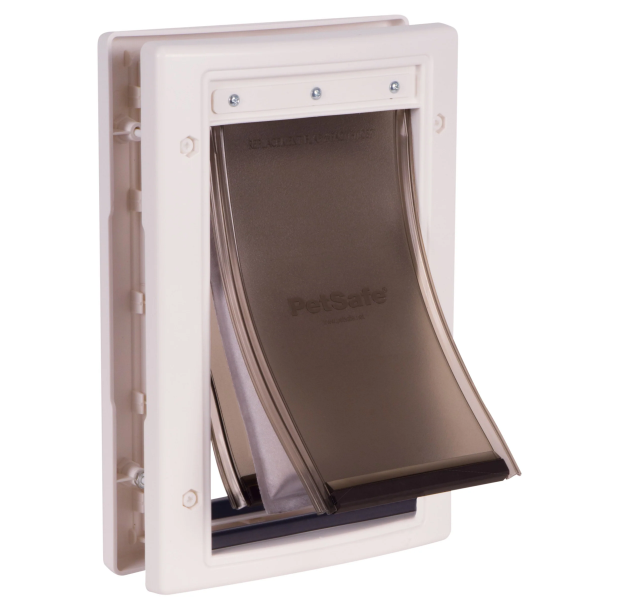
I understand the appeal of the PetSafe Extreme Weather. PetSafe is everywhere, the price isn’t outrageous, and the Extreme Weather version is already several steps beyond a thin flap hanging in a hole in the door. It uses three flaps, including an insulated center layer, and PetSafe says it is 3.5 times more energy efficient than a traditional single-flap pet door.
If I lived somewhere with a fairly mild winter, I’m not sure I’d keep shopping. Michigan changes my tolerance for this kind of thing. Winter wind finds tiny gaps that you probably forgot existed during the summer. We’ve had doors around the property that seemed perfectly fine in September, but by November, you could feel cold air coming through one edge every time you walked past.
So, I started looking more closely at how the flap actually seals around the edges, not just how many layers are in the middle. Three flaps sound reassuring, and insulation certainly helps, but neither tells you the whole story when it comes to how much cold air gets through.
RANGER Pet Doors: The Strongest Cold-Weather Pick
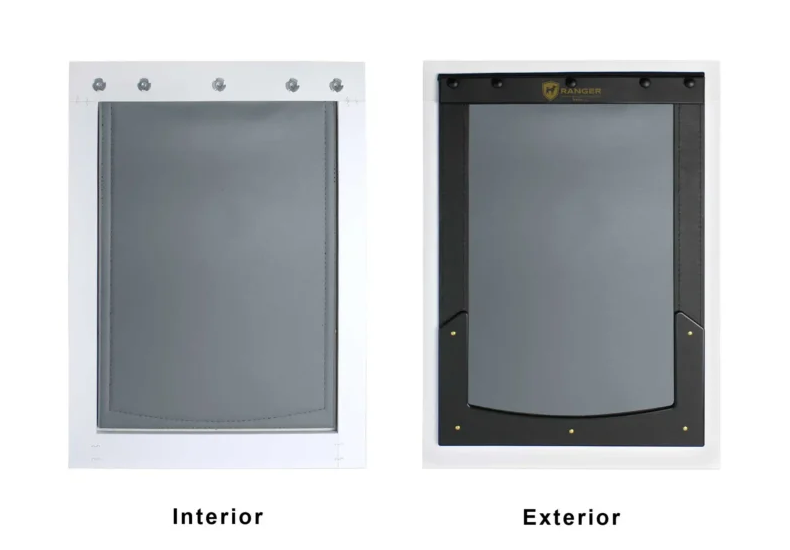
RANGER Pet Doors uses an insulated flap with a magnetic sealing system called “DoubleMag,” which pulls the flap tightly against the frame to create an airtight seal around the opening. The flap has an insulated rubber core protected by marine-grade canvas, and RANGER says it stays flexible at -40°C and below. The frame is made from cellular PVC instead of aluminum, which helps reduce heat transfer.
On paper, all of that sounds promising for a Michigan winter, but I wouldn’t spend several hundred dollars based on a materials list alone. RANGER has also had the door independently tested for air leakage. The test report measured air infiltration at 0.04 cubic feet per minute per square foot and air exfiltration at 0.03, and the company says that is 15 times better than the U.S. Energy Star air-leakage requirement for human doors. Energy Star doesn’t certify pet doors, but having a measured result makes the price easier for me to understand.
Installation is a downside I’d have to accept with most of the more substantial pet doors I looked at, and RANGER is no exception. The door-mounted RANGER requires measuring, cutting into the exterior door, drilling, sealing, and making sure everything is square. The company provides instructions and video guides, but this still assumes somebody is comfortable using power tools. I’d hand the instructions to my husband before ordering and let him decide whether this is a DIY project or a call-somebody project.
Sizing is another reason RANGER stayed on my list. We have a giant breed, so “large dog” on a product page frequently means something very different from “large dog” in our house. RANGER’s XL opening measures 16 by 23 inches and is recommended by the company for breeds such as Great Danes, so it’s at least a realistic option for a dog his size. A lot of pet doors would be out of the running before I even got to the weather claims.
Endura Flap: A Stronger Warranty for Less
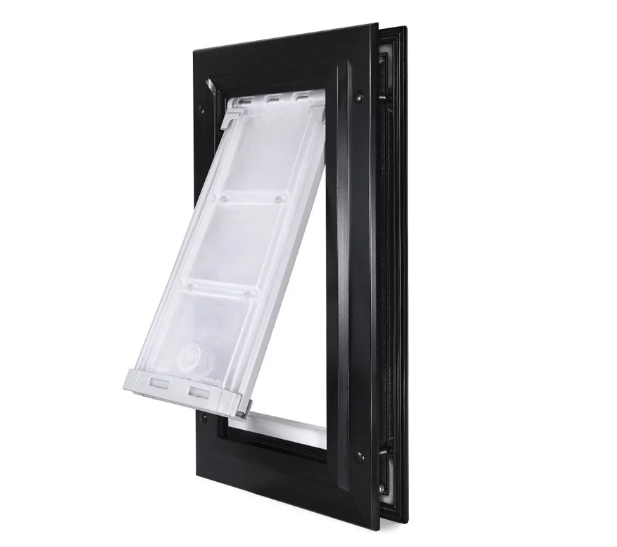
Endura Flap is the one that would make me hesitate before ordering RANGER. Its door-mounted version starts at $279.99, which is still expensive for a pet door, but depending on the size and configuration, it can come in below RANGER. The flap is insulated, seals magnetically around the edges, and Endura says it can resisit wind gusts up to 50 mph. You can choose a single- or double-flap setup, and the double-flap version adds another layer of insulation for colder climates.
The lifetime warranty is probably the biggest thing in Endura’s favor for me. Replacement flaps are available too, so if something wears out years from now, I’m replacing a part instead of starting over with a new pet door. The warranty does have limits, including damage from chewing or improper installation, but it’s still much longer coverage than RANGER’s three-year limited warranty.
Installation isn’t especially casual, either. Endura’s door-mounted models still require measuring, cutting, drilling, leveling, and sealing, so I’d want to look through the instructions before assuming this was an easy afternoon project.
Where I’d still lean toward RANGER is the testing. Endura publishes plenty about its insulation, magnetic closure, and wind resistance, but I couldn’t find a published air-leakage result to compare directly with RANGER’s. If this were going into a milder climate, though, the lower price and lifetime warranty could very easily pull me toward Endura.
PlexiDor: A Better Fit for Giant Dogs
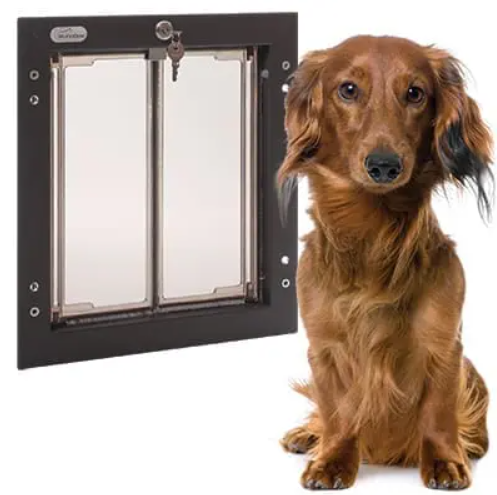
PlexiDor looks nothing like the other doors here. Instead of a hanging flexible flap, it uses two rigid saloon-style panels lined with weather stripping, and door-mounted models currently start above $500.
PlexiDor is more than I’d want to spend unless it gave me something I couldn’t get elsewhere. For us, the sizing could be that reason. PlexiDor makes a model for dogs up to 225 pounds, which puts it in a range that could realistically work for our dog. A surprising number of pet doors labeled XL are still made for dogs nowhere near his size.
The rigid-panel design could also make sense if your dog is hard on flexible flaps, and PlexiDor backs its residential doors with a 10-year warranty. I’d only spend that kind of money if the dog or the rigid-panel design were the reason I wanted it. For our house, I’d still prioritize cold-weather sealing first.
Ideal Pet Ruff Weather: The Closest Budget Alternative to PetSafe
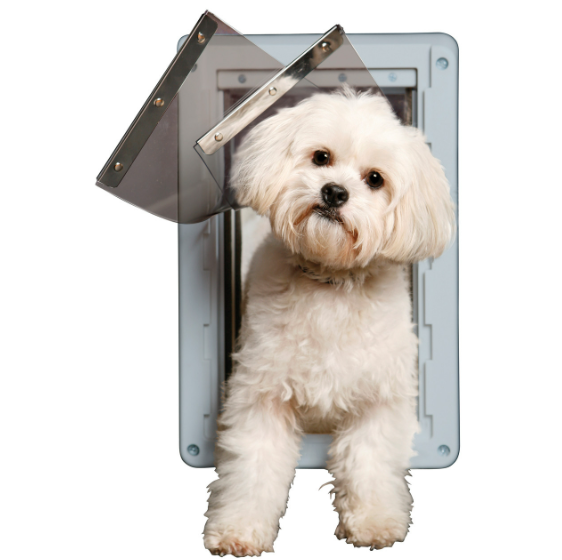
We actually already have a Ruff Weather door, the double-flap version, installed in an insulated shed the previous owners used for their German Shepherds. I don’t know exactly how old it is, but the flaps don’t sit especially neatly against the edges anymore, which is the kind of thing that becomes a bigger deal in a Michigan winter than it would somewhere milder.
That’s not necessarily a knock on the door when it’s new. It uses two flexible vinyl flaps with a three-inch air pocket between them, current pricing starts in the mid-$80s and rises with size. That puts it much closer to PetSafe’s price range than the premium options here, while still giving you a dual-flap design intended for harsh weather. It’s just that ours has had years of use and an unknown install, and it shows.
If I were buying one new today to stay somewhere around $100, I’d still put it up against PetSafe directly. But knowing what ours looks like now, I’d pay closer attention to how the flaps are supposed to seat against the frame out of the box, not just the flap count or the air pocket spec. I also wouldn’t expect the same level of sealing I’m looking at with some of the more expensive options.
For our house, sizing would be another issue. Ideal recommends the largest Ruff Weather model for dogs up to 120 pounds, well below our Mastiff’s roughly 180 pounds. So even if my PetSafe was generally working fine and I were replacing it because it was worn out, Ruff Weather would stay in the conversation. If I were replacing it because I was specifically frustrated with cold air coming through, our shed door is exactly the kind of result that would push me farther up the price range instead.
What I’d Check Before Choosing Any Pet Door
I’d measure the dog first, of course, but I’d look just as closely at the actual door or wall where the pet door is going. A size that fits the dog still has to fit the space you plan to cut, and some exterior doors have raised panels, glass, or other details that make placement less straightforward.
Installation is another thing I’d figure out before ordering. Some door-mounted models are very doable for someone who’s handy with a saw and drill. A wall installation is a different commitment, especially if you are dealing with siding, brick, insulation, or a weather barrier. Paying for professional installation adds to the cost, but so does repairing a badly cut exterior door.
Security would be on my list too. RANGER’s standard door- and wall-mounted models include a locking security panel, while its Basic version does not. PetSafe, Endura, PlexiDor, and Ideal use their own locking or closing systems depending on model. I’d want to know how easy it is to use and whether I’d realistically put it in at night or when we leave town.
Then there are replacement parts. RANGER sells replacement flaps and seals and stocks parts for older and discontinued models, including doors sold under its former Freedom Pet Pass name. Endura sells replacement flaps too. Once I’ve cut into an exterior door, I want to be sure I can replace the part that wears out instead of replacing the whole setup.
My Top Pick: RANGER Pet Doors
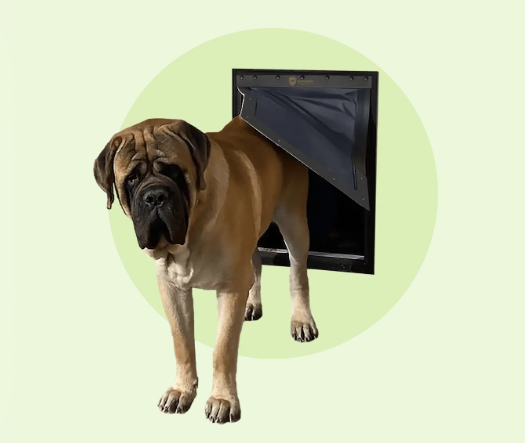
I’d still end up buying RANGER for our house, although Endura would probably sit open in another browser tab until I placed the order. Michigan weather is what tips it for me. If I’m already spending several hundred dollars on a pet door, I’d rather have published air-leakage data than make the call based mostly on flap design and weather claims.
I don’t think someone in a milder climate necessarily needs to make the same choice. But if cold air coming through an existing PetSafe were the reason I started shopping in the first place, I’d go farther up in price and choose RANGER. I have enough things around this property to winterize without intentionally adding one more draft to deal with.