

- Ideal Ruff Weather vs RANGER: What’s Worth Paying for Before You Cut the Hole? - October 6, 2026
- Endura Flap Alternatives: What Else Should You Consider Before Buying One? - September 9, 2026
- Best Dog Doors for Cold Weather: What I’d Actually Buy - September 3, 2026
A pet door can be well-built and still not be the best fit for your dog, your house, or your budget. That can be especially true once you go beyond the basic pet doors and start comparing models specially built for cold weather, stronger winds, or heavy everyday use. If you’re considering an Endura Flap but haven’t quite committed, it helps to look at what you would actually want an alternative to do differently. Maybe you want a tighter seal, different frame material, an easier installation, or simply something less expensive.
The options below have different approaches, so the best alternative depends on what feature will bring you the biggest benefit.
Endura Flap Alternatives at a Glance
| If this is your concern | I’d also look at | Why |
|---|---|---|
| You want measured air-leakage performance | RANGER Pet Doors | RANGER publishes third-party testing of how much air passes through the closed pet door |
| You need unusually specific sizing or installation options | Hale Pet Door | Hale offers far more opening dimensions and installation configurations |
| You are tired of replacing flexible flaps | PlexiDor | It uses rigid swinging panels rather than a traditional flexible flap |
| You want a lower-cost dog door | PetSafe Extreme Weather | It provides a weather-focused insulated design at a fraction of the cost |
Endura Sets a Fairly High Bar to Begin With
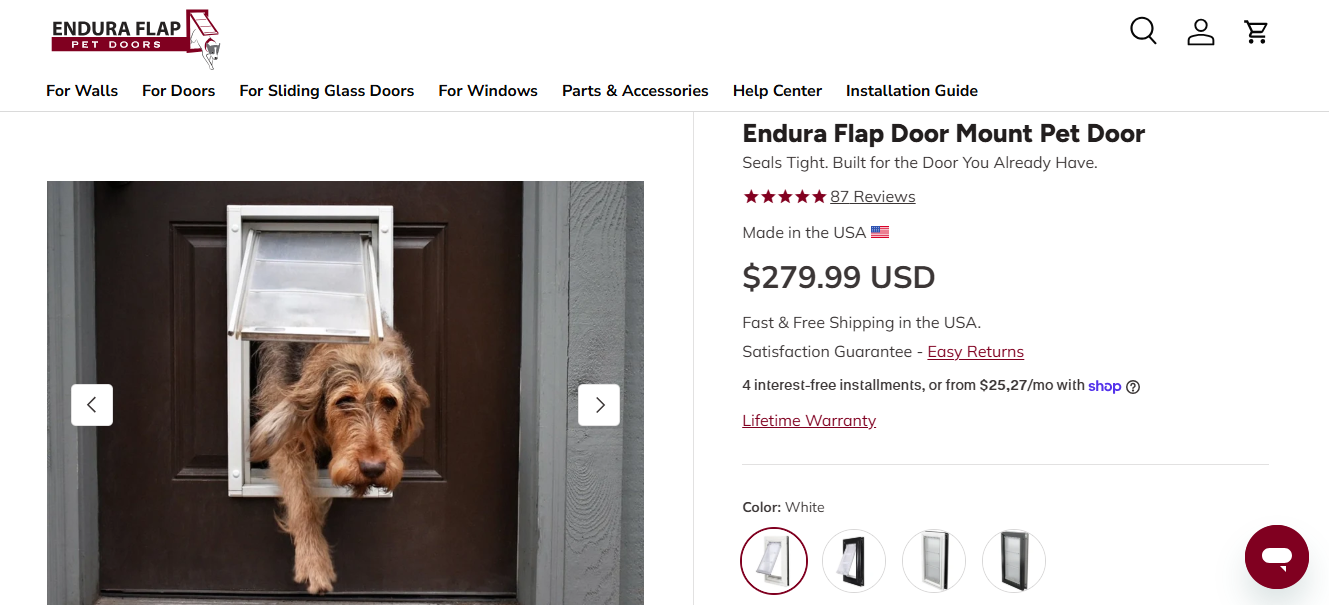
Endura’s Door Mount starts at $279.99, and the construction helps explain why it costs considerably more than a basic pet door. The flap is built with two flexible layers that create an insulating air space between your house and the outdoors. Magnets along three sides help pull it back into position after the dog passes through.
The magnets are adjustable, so you can increase the holding force in windy conditions or back it off if your dog has trouble pushing through.
Endura says the flap remains flexible at -40°F and can withstand wind gusts up to 50 mph. You can also order a single- or double-flap version. I would pay more attention to those specifications if the pet door were going on an exposed side of the house, where it could take direct winter wind for hours at a time. Under a covered porch, I probably would not give the wind rating quite as much weight.
Endura’s lifetime warranty covers normal wear and tear as well as manufacturing defects, which is unusually generous for a product with a flap getting pushed back and forth every day. Chewing and improper installation are excluded, but covered defective parts can be replaced, and replacement flaps are available separately if one eventually needs to be changed.
RANGER Focuses More Heavily on Air Sealing
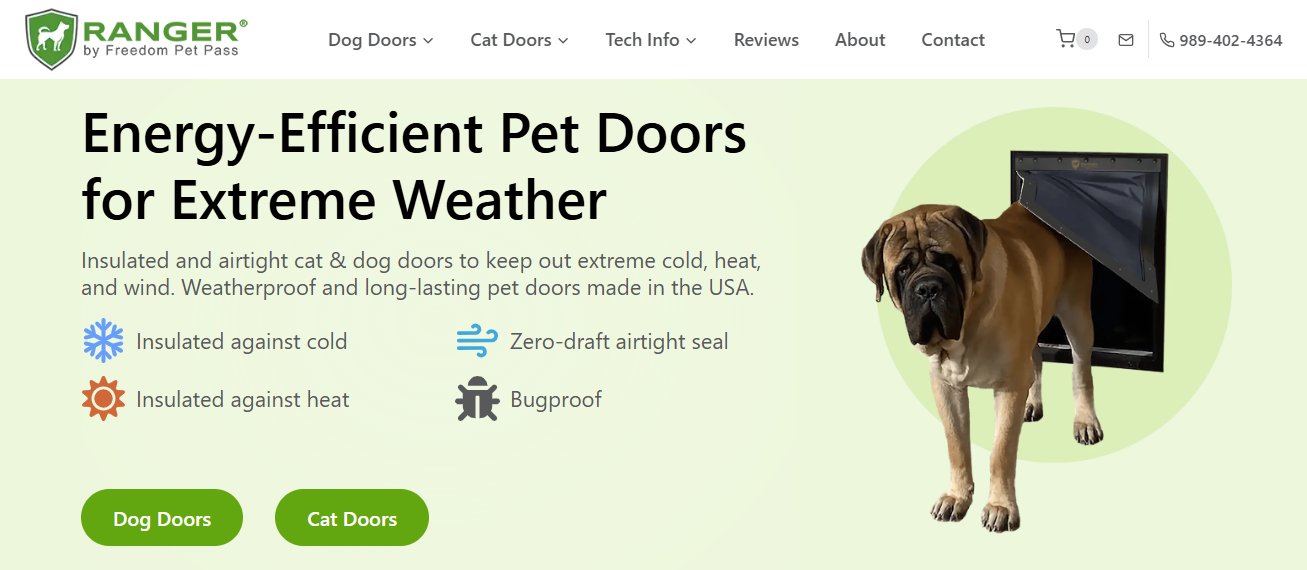
RANGER Pet Doors takes a different approach to the flap itself. It uses a single, thicker insulated flap with a type of synthetic rubber core also commonly used in tires. The material stays flexible through temperature changes and holds up to repeated bending and wear, while marine-grade canvas protects the outside from daily use and weather exposure. In cold weather, that flexibility helps the flap return where it belongs instead of stiffening up and sitting slightly open.
Around the edges, the DoubleMag system uses magnets to pull the flap against the seal rather than letting it simply fall back into place. This helps close off the small gaps where outside air can keep moving through even when the pet door looks shut.
The company says its independent air-leakage testing found that very little air passes through the closed door, performing about 15 times better than the U.S. Energy Star air-leakage requirement for exterior doors. Energy Star does not certify pet doors, but the comparison gives some context for how tightly the door seals.
The frame adds another difference. Endura uses aluminum, while RANGER uses cellular PVC, which transfers far less heat. For a pet door opening directly into a heated living space, that means less heat moving through the frame itself.
The standard RANGER Dog Doors for Doors starts at $289, putting it in roughly the same price tier as Endura. RANGER offers a three-year limited warranty, with replacement flaps and seals available separately and continued parts support for older models.
Hale Gives You More Room to Work With the Dog and the House
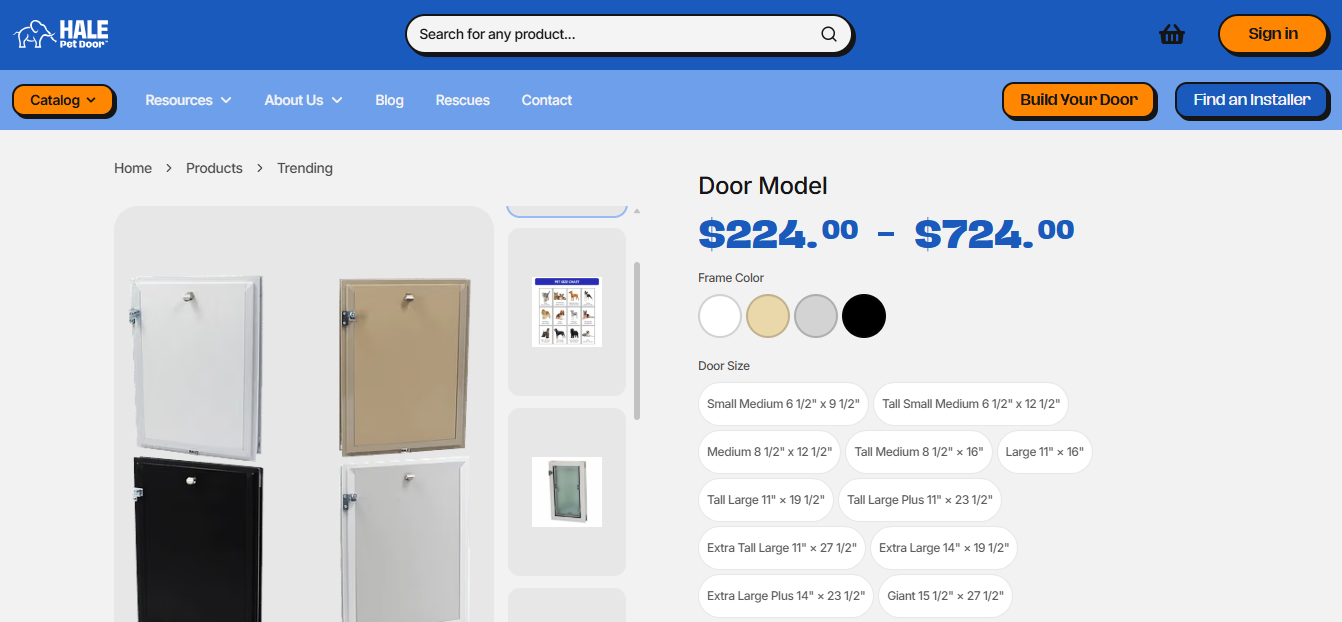
Hale is the one I’d look at if the standard size charts aren’t lining up well with your dog or the space you have to work with. Its Door Model starts around $224 and comes standard with two flexible flaps, with a single-flap version also available. Hale offers 11 standard sizes, from small pet openings through a Giant size, so there is more room to find dimensions that fit your dog rather than settling for the closest standard size.
Two 100-pound dogs can need surprisingly different openings if one is tall and narrow and the other is shorter and broad through the chest. Weight ranges help narrow the search, but they cannot tell you whether your dog will clear the opening comfortably through the shoulders and back. I’d highly recommend taking your dog’s measurements over using the weight charts.
The house can complicate things just as quickly. Hale makes models for doors, walls, screens, windows, and several other applications. Raised door panels, unusual wall depth, tight clearance, or an existing window can all influence what will physically fit before you get very far into comparing cold-weather claims.
Hale uses flexible flaps with magnetic weather sealing and an extruded aluminum frame. Aluminum gives the door a rigid, durable structure, and Hale reinforces the corners with steel. It is not as insulating a frame material as cellular PVC, but the construction is built around long-term durability, and Hale backs the frame with a lifetime warranty.
PlexiDor Is Worth Considering When Flexible Flaps Keep Wearing Out
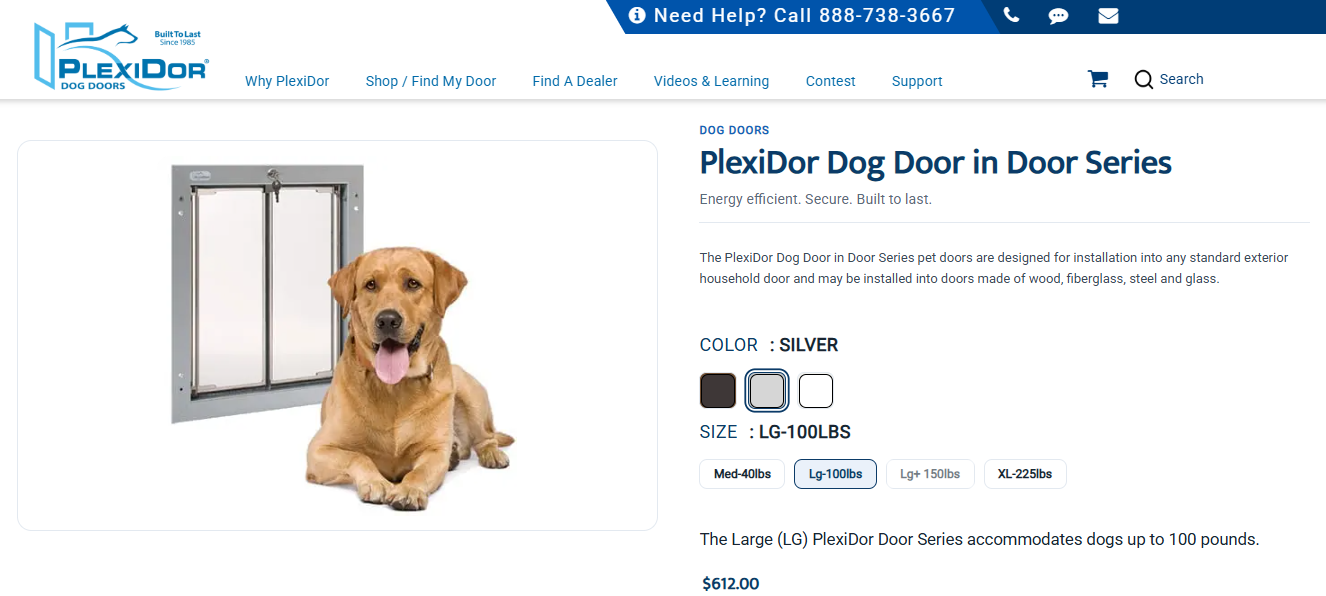
PlexiDor is the biggest departure from Endura in this group. Its Door Series uses two rigid panels that swing open like saloon doors and spring back against weather stripping around the edges. PlexiDor says the material is designed to handle impact, sun, and temperature changes, which could make it a better fit if durability is the main reason you are looking beyond a traditional flexible flap.
I can see paying more for that if you already know your dog is hard on pet doors. Scratching, chewing, and years of pushing through the same flap can eventually take a toll, and PlexiDor removes that particular wear point altogether. The Door Series starts above $500, though, so I would want a pretty good reason to spend the difference.
The larger sizes also reach into giant-breed territory, which could keep PlexiDor on the list if the openings on other doors are getting tight. Its residential warranty runs 10 years, and service parts are available if something in the system eventually needs attention. PlexiDor would move ahead for me if I had already been through multiple flexible flaps or if its opening dimensions worked better for my specific dog’s measurements.
PetSafe Extreme Weather Can Keep You From Overspending
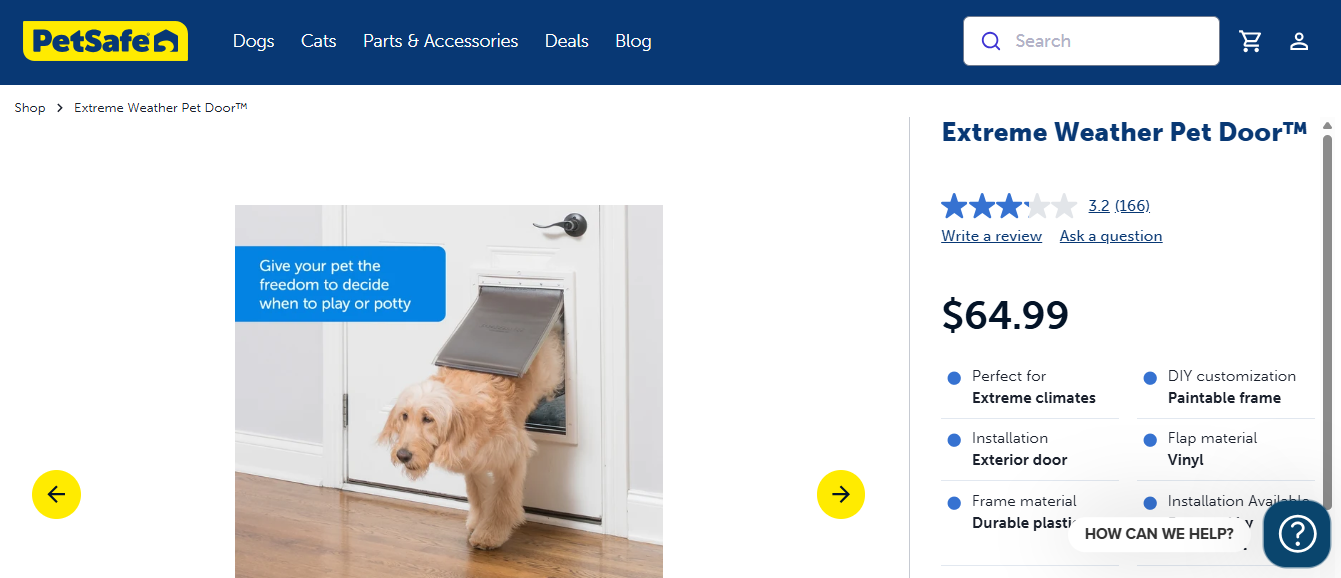
PetSafe Extreme Weather sits at the opposite end of this comparison. It starts around $65 and uses three flexible flaps, including an insulated center layer, inside a plastic frame.
The construction is simpler, and the price reflects it. A pet door opening directly from a heated living space outdoors has more work to do than one leading into a garage, enclosed porch, or insulated dog shed, especially if that second opening is protected from direct wind and rain. In those situations, PetSafe may provide all the insulation you need without spending several hundred dollars.
The size range is more limiting, so owners of giant breeds may rule it out before price even becomes the deciding factor. I would check the actual opening dimensions first, especially if your dog is already pushing the upper end of most pet-door charts.
For a secondary space or a milder installation, I could see stopping here. I would spend more only if I needed better sealing, a tougher frame, a different opening size, or another feature the cheaper door does not give me.
Installation Format Can Narrow the List Quickly
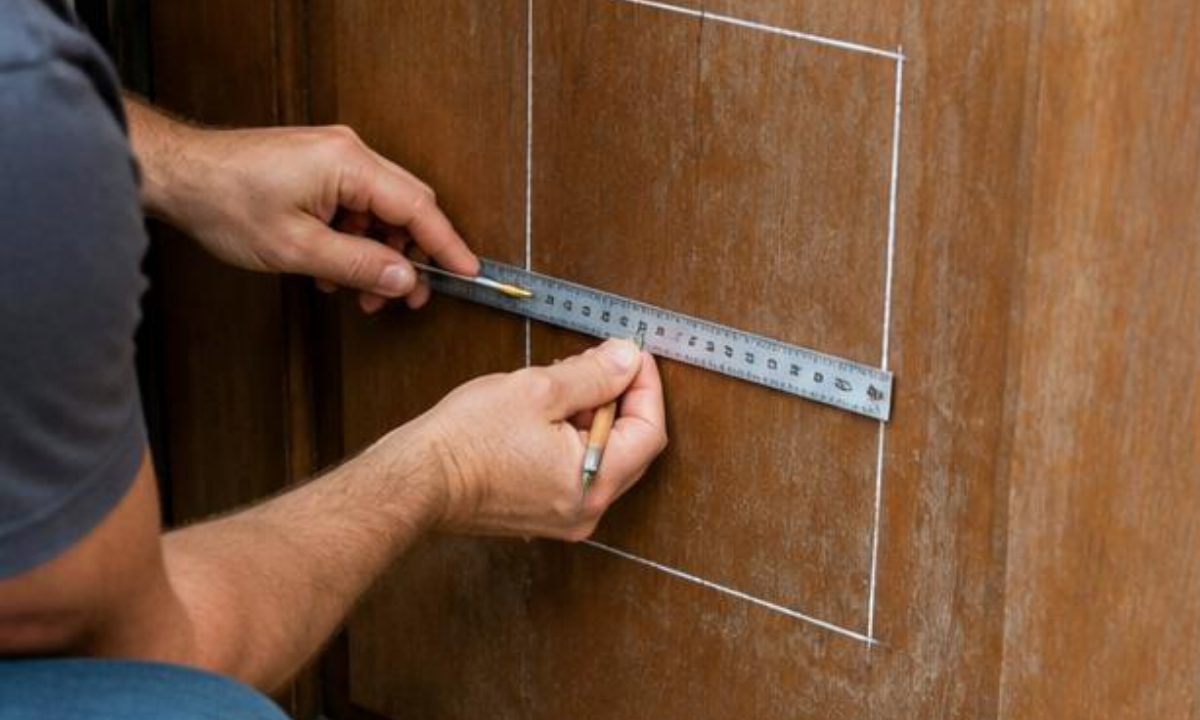
Where you plan to put the pet door can eliminate options surprisingly early.
A door-mounted pet door is usually the most straightforward if you already have a suitable exterior door, but raised panels, glass, decorative trim, or limited space near the bottom can interfere with the cutout. Wall models require a tunnel through the wall and introduce questions about wall thickness, insulation, siding, framing, and anything hidden inside the cavity.
Security panels need room too. A panel that slides down from the top may be awkward if there is very little clearance above the pet door, while another installation may have plenty of vertical room but little space to either side.
Screen and window installations are another reason Hale stays interesting. If cutting the main exterior door is undesirable or the house gives you a strange location to work with, a company offering more installation formats gives you more ways to design around the house rather than forcing the house to accommodate a particular pet door.
Wall installations can also change the price comparison. The pet door itself may cost more, and the installation is more involved than tracing a template onto a basic wood door and cutting the opening. Before comparing prices too closely, make sure you are comparing the version you can realistically install.
How I’d Weigh Price Against Durability
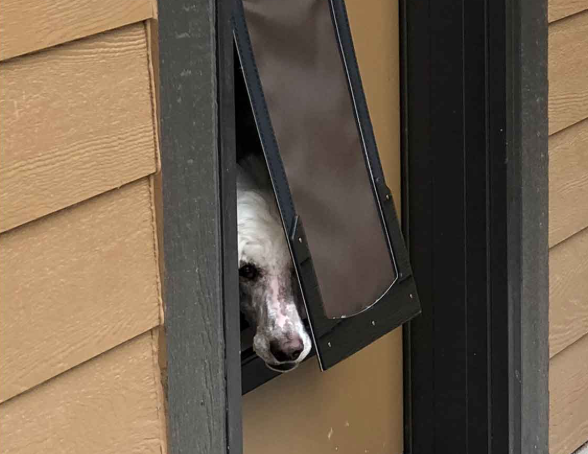
The warranty and replacement parts would carry more weight for me here than they would on something I could easily swap out later. Once the opening is cut, I want to know I can service the door rather than start the whole project over.
A less expensive door may be perfectly adequate in a protected space, while repeated flap replacement can make a more expensive design easier to justify over time. The amount of work involved in the original installation counts too, especially if replacing the entire assembly later means finding something that works with a hole that already exists.
For an exterior opening directly into heated living space, I would compare Endura most closely with RANGER. If air leakage is what sent you shopping in the first place, RANGER gives you independent testing aimed directly at that problem.
For our Michigan house, if I were already looking beyond Endura, that might be enough to give RANGER the edge. The opening has to accommodate a roughly 180-pound Mastiff and separate heated indoor space from months of freezing weather. I am comfortable paying more for the air sealing there.
Endura would still be high on my list, especially if the lifetime warranty or the 50 mph wind rating answered the bigger concern for the installation. But if I had already decided Endura was not quite the right fit for this house, RANGER is probably where I would land.