

- Ideal Ruff Weather vs RANGER: What’s Worth Paying for Before You Cut the Hole? - October 6, 2026
- Endura Flap Alternatives: What Else Should You Consider Before Buying One? - September 9, 2026
- Best Dog Doors for Cold Weather: What I’d Actually Buy - September 3, 2026
A pet door is a little different from most things you buy for a dog. If a bed or crate turns out to be wrong, you can replace it. A pet door eventually involves a saw and a permanent opening in an exterior door or wall, so the comparison gets more serious than which one looks better insulated on a product page.
Ideal Ruff Weather sits at the less expensive end of this comparison, but it is not a bare-bones pet door. RANGER Pet Doors costs considerably more, which puts more pressure on the differences between them to actually do something for the homeowner once the door is installed.
Ideal Ruff Weather vs RANGER at a glance
| Ideal Ruff Weather | RANGER Dog Doors for Doors | |
|---|---|---|
| Price | $85.99–$159.99 | $289–$569 |
| Flap design | Two vinyl flaps with a 3-inch air space | One thick insulated flap |
| Closure | Magnetic flap closures | DoubleMag magnetic sealing system |
| Frame | Structural-foam plastic | Cellular PVC |
| Size Range | S-XL | S-XL |
| Warranty | 1 year | 3-year limited warranty |
| Availability | Direct and major retailers | Direct from RANGER |
Flap design: Two thinner flaps vs. one insulated flap
The biggest visual difference between these doors is probably the easiest one to misunderstand. Ideal Ruff Weather uses two flexible vinyl flaps with roughly three inches of air between them, while RANGER uses one much thicker insulated flap.
Ideal’s air space is there for a reason. Trapping air between two layers slows heat moving through the opening, much like the basic principle behind using multiple panes in an insulated window. You are not relying on one thin sheet of vinyl to separate the indoor temperature from whatever is happening outside.
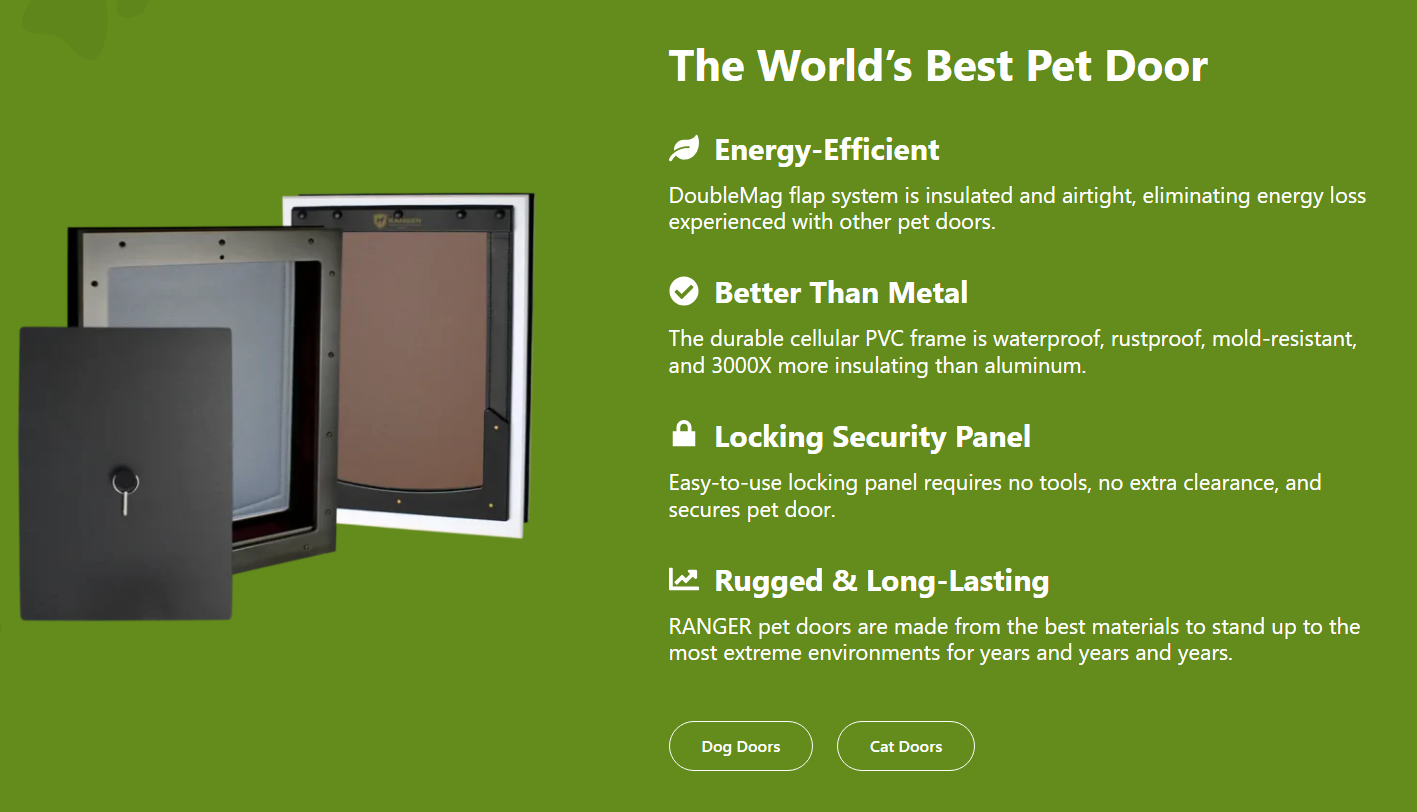
RANGER puts the insulation into the flap itself. Inside is an SBR rubber core, which is a type of synthetic rubber, with marine-grade canvas protecting the outside. RANGER says the flap remains flexible down to -40°C and below.
That flexibility becomes more relevant the colder it gets. A pet door flap has to move every time the dog goes outside and then fall back into position. If the material gets very stiff in low temperatures, it can have a harder time settling where it belongs.
Neither design can really be judged by counting layers. Ideal is creating insulation with two flaps and the air between them. RANGER is using a thicker insulated material in one flap. The harder question is what happens after the dog pushes either one open.
Magnetic closures: Both doors use them
Both doors use magnets, but the construction is different. On the Ruff Weather, Ideal uses magnetic retainer bars along the bottom of the flaps to help catch them as they swing back down and hold that bottom edge closed. With the two-flap design, you have that magnetic closure on both sides of the three-inch air space.
RANGER’s DoubleMag system brings the magnets farther around the opening. Magnetic strips run along the sides and bottom of the flap, so the closure is working around more of the perimeter rather than primarily at the bottom edge.
Why care about that at all? Because the insulation in the middle of a flap only does so much if cold air can work its way around the edges. Every time the dog goes through, the flap has to move freely and then come back against the frame closely enough to limit those little gaps. Magnets help make that return more consistent, and having them along the sides as well as the bottom makes it easier for the flap to go back into place.
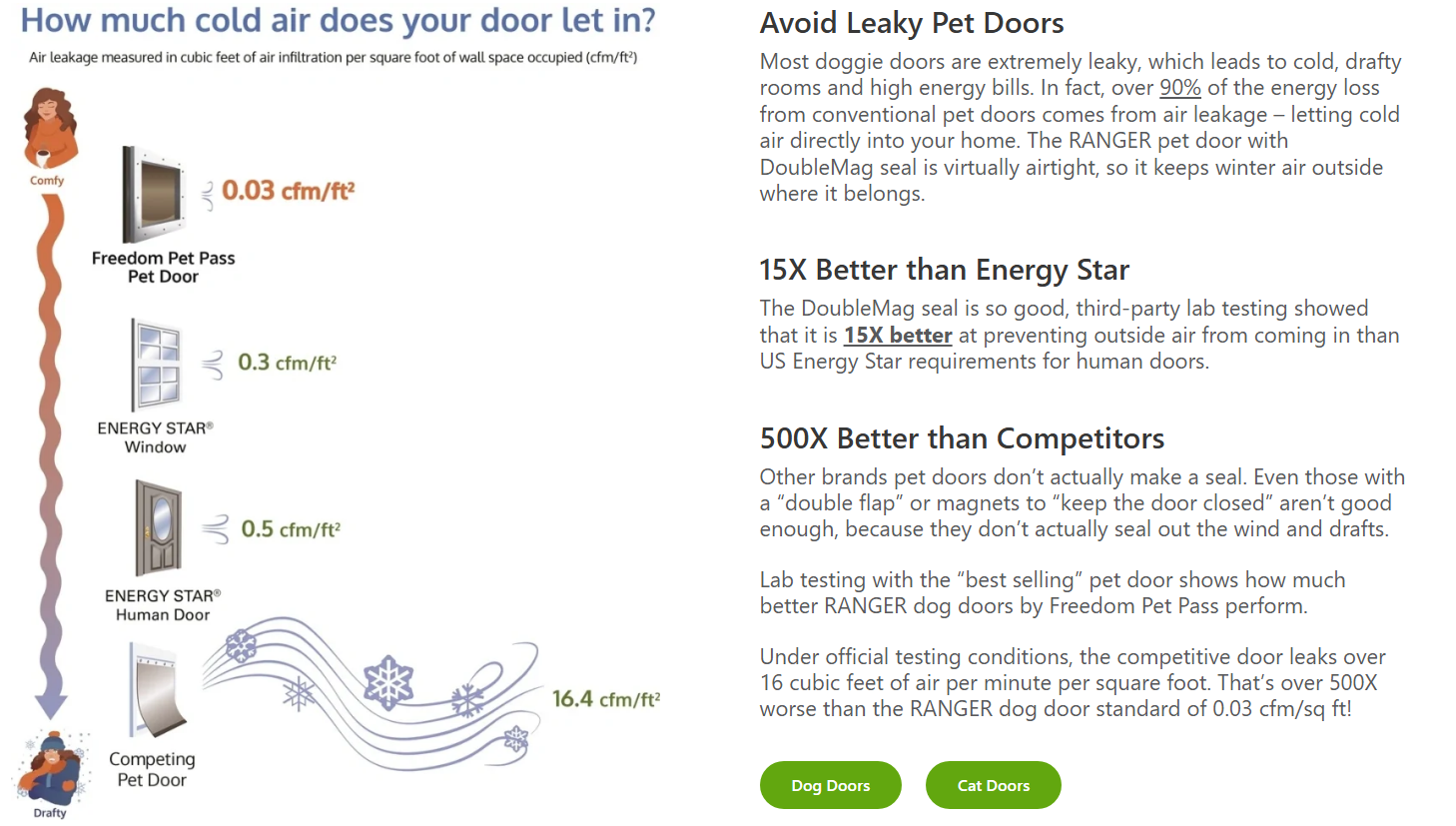
Pet doors cannot be Energy Star certified, but RANGER still put its finished door through the same type of air-leakage testing used for Energy Star-certified exterior doors. It measured 0.03 cubic feet of air per minute per square foot, which RANGER says is 15 times tighter than the limit for those human doors. So instead of judging the seal only by how the flap, magnets, and frame are designed, you have a controlled result showing how much air actually goes through.
Frame material: Both make a good choice here
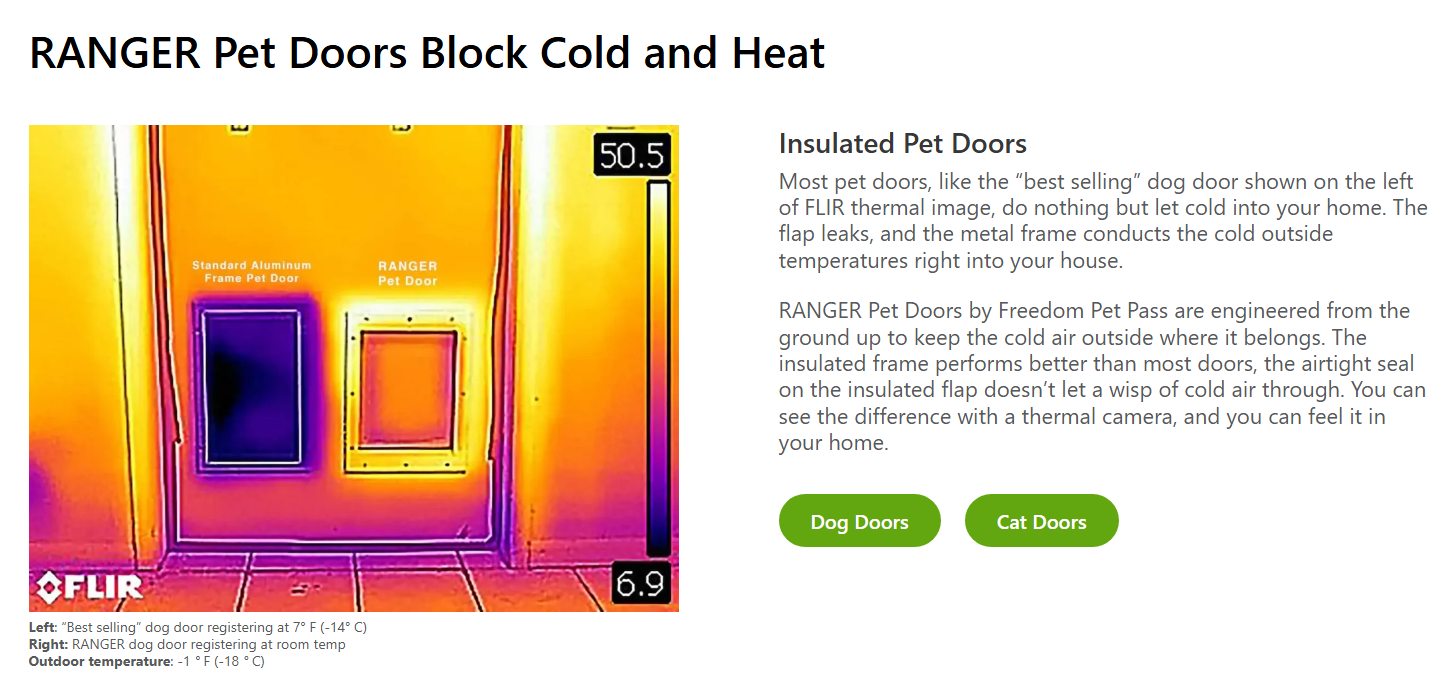
Ruff Weather uses a structural-foam plastic frame, while RANGER uses cellular PVC. A lot of pet doors use aluminum, but both of these models avoid putting a metal frame around the opening, which helps reduce heat transfer in cold weather.
RANGER’s cellular PVC has some added advantages around moisture and weather exposure, while Ideal’s structural-foam frame still gets you away from the conductivity of aluminum. I would give both doors credit here. The frame material is a strength of each, rather than one of the areas that really separates them.
Sizing: Same four sizes, but RANGER runs wider
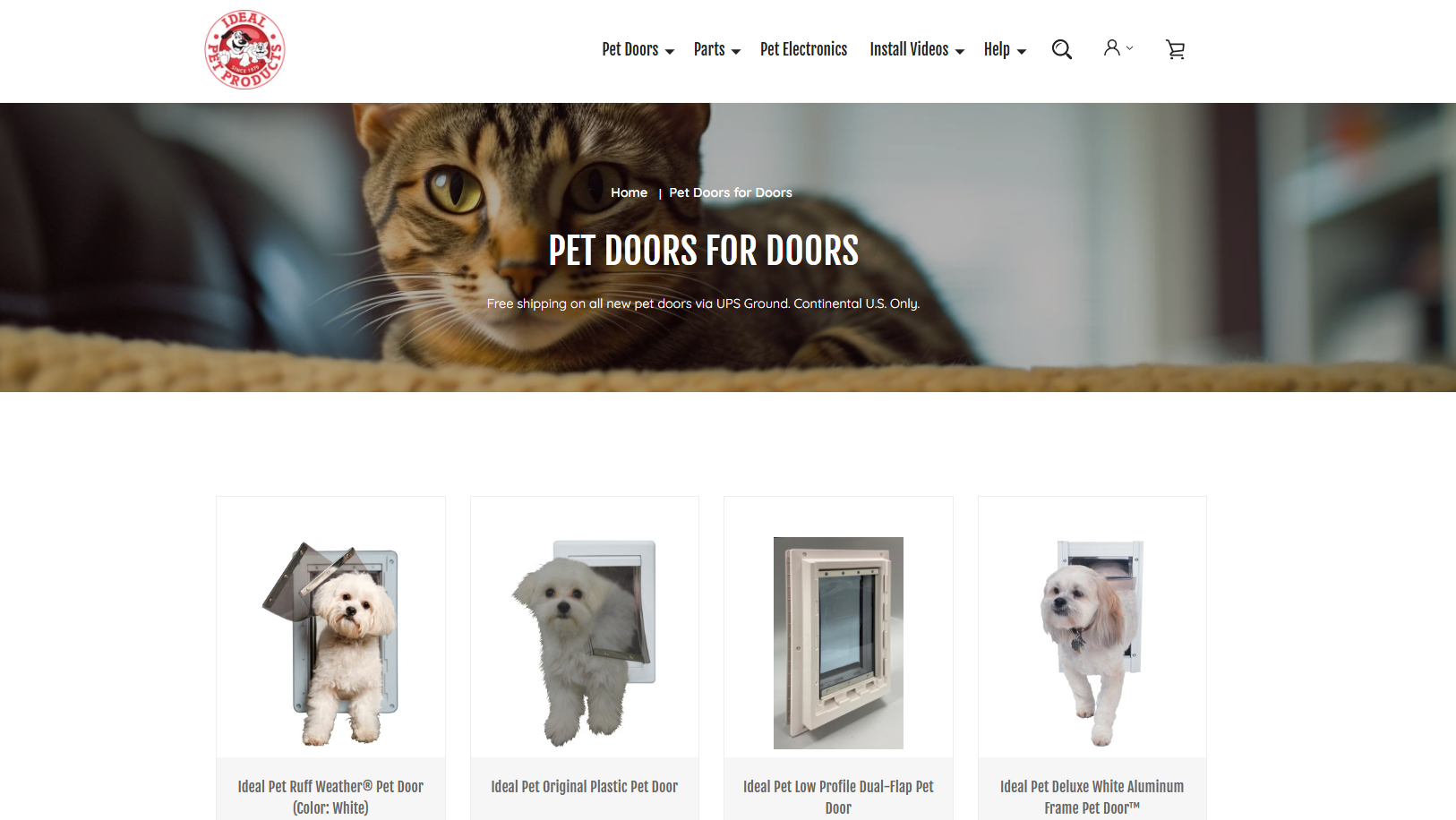
Both brands offer four sizes, so neither gives you more choices on paper. The difference shows up in the shape of the openings. RANGER runs wider at every size, while Ideal’s Ruff Weather is generally a little narrower.
| Size | Ideal Ruff Weather opening | RANGER opening |
|---|---|---|
| Small | 5 x 9.25 in. | 6 x 10 in. |
| Medium | 7.25 x 13 in. | 9 x 13 in. |
| Large | 9.75 x 17 in. | 11 x 17 in. |
| XL | 15 x 23.5 in. | 16 x 23 in. |
RANGER gives you another inch of width at Small, 1.75 inches at Medium, 1.25 inches at Large, and another inch at XL. At the largest size, Ideal trades some of that width for another half-inch of height.
Ideal also makes it easier to start with the dog’s weight because it publishes ranges for each size, from 2 to 12 pounds for Small up through 91 to 120 pounds for Extra Large. RANGER leans more on breed examples, ranging from smaller dogs and cats at the bottom end to Great Danes for XL.
Neither approach replaces measuring the actual dog. A stocky 80-pound dog and a skinny 80-pound dog may fit very differently through the same opening. Measuring the widest part of the chest and shoulder height, then mocking up the opening with cardboard, gives you a much better idea of how much room the dog will actually need.
Our dog is around 200 pounds, so I tend to notice width quickly, but the same principle applies at the other end of the chart. With a small dog, you do not necessarily want to cut a much larger opening than you need either.
Warranty and replacement parts: Both can be repaired
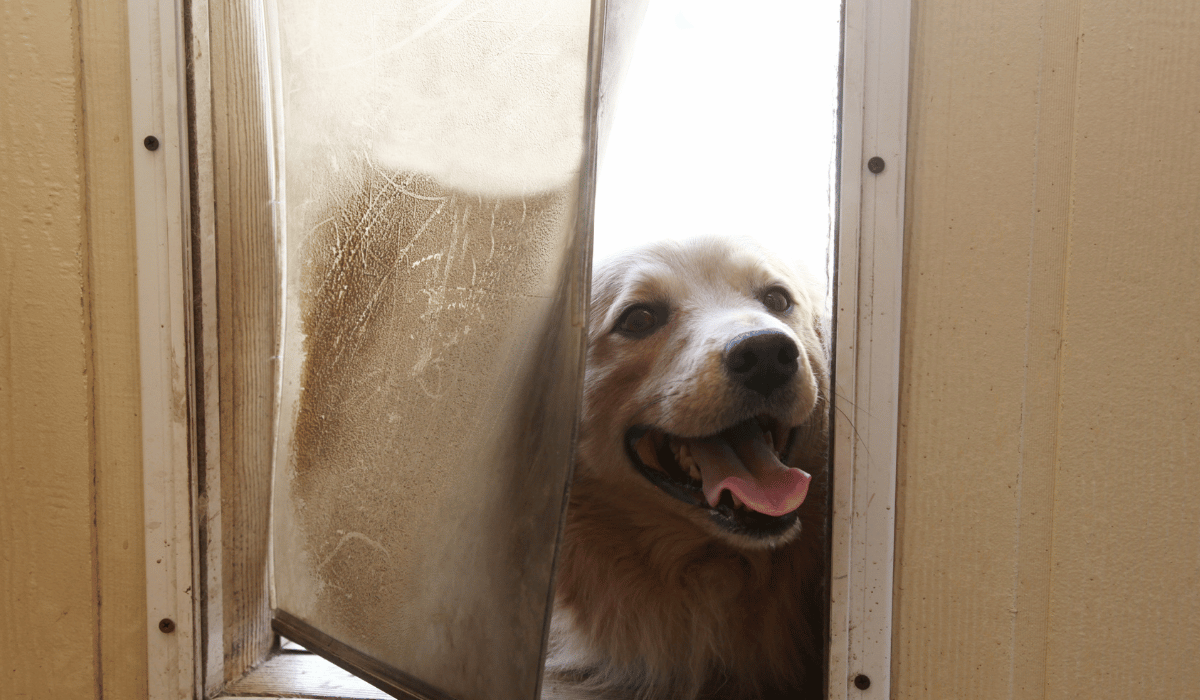
Ideal sells replacement flaps, frames, magnet retainers, lock-out slides, and other Ruff Weather components. That becomes important once the door is already cut into your house. If a flap cracks or a closure piece wears out, replacing that one part is a much easier fix than replacing the entire pet door and potentially having to deal with an opening that no longer matches the new model.
The Ruff Weather comes with a one-year warranty. RANGER extends that to a three-year limited warranty on its standard pet doors and also sells replacement components. RANGER says it continues to support older and discontinued models with parts as well, which could make a difference several years down the road if the door itself is still fine but one fitted piece needs to be replaced.
Ideal gives you a solid repair path, especially at its lower price point. RANGER gives you more warranty coverage and more reassurance that you should still be able to maintain the door after the original model has been around for a while.
Availability and price: Ideal is easier to shop
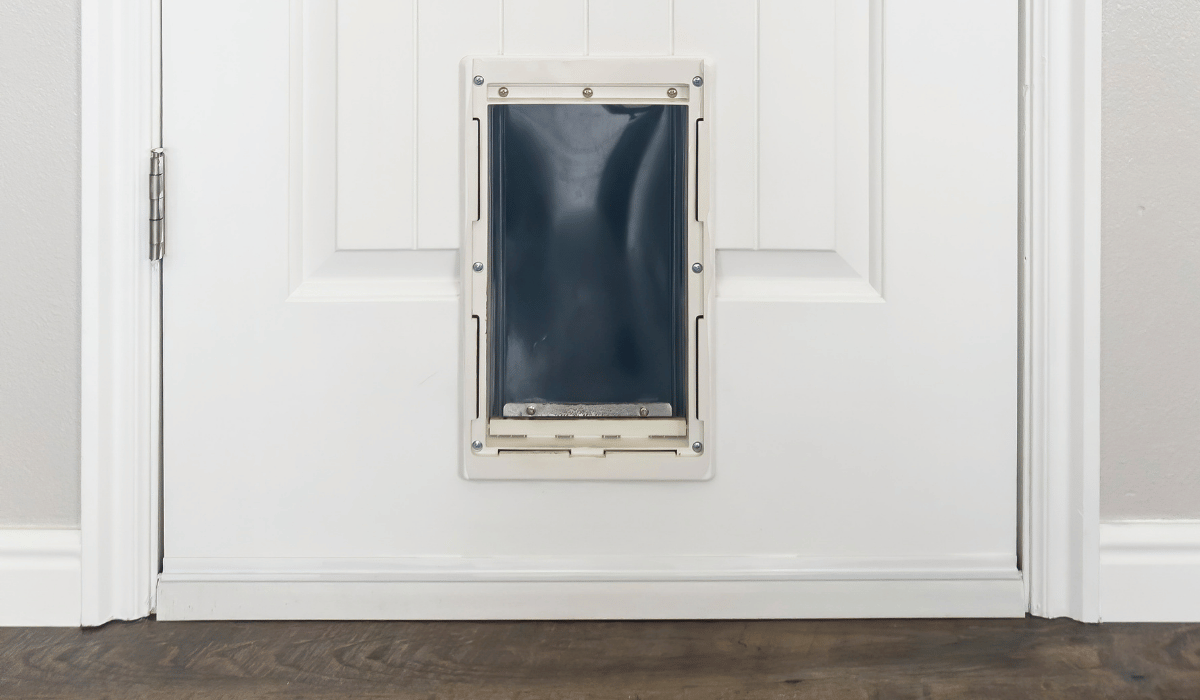
Ideal has a pretty straightforward advantage here. Ruff Weather is sold directly by the company and through major retailers, so there are more places to compare prices, shipping, and return policies.
RANGER sells its doors directly. Its standard dog doors are currently listed as in stock and shipping the same business day or the next, so buying direct does not necessarily mean waiting longer. You simply have fewer places to shop around.
Ideal is also the less expensive option by a wide margin. RANGER does have a Basic line starting at $169, but it is not the same product as the Dog Door for Doors. The Basic model keeps the insulated flap and DoubleMag closure while using a simpler frame and leaving out the locking security panel, and RANGER positions it more toward advanced DIYers and construction professionals.
For someone comparing the standard versions of these two doors, Ideal is the easier place to stay on budget. RANGER asks you to spend more for the sealing system, testing, and longer warranty.
Ideal Ruff Weather or RANGER: Which one would I choose?
If this were going into our garage or a protected mudroom, I would probably buy the Ruff Weather door. It already covers the cold-weather basics well enough that I would have a hard time justifying several hundred dollars more for that kind of opening.
I feel differently about cutting a pet door directly into a heated living space. RANGER’s air-leakage testing piques my interest more, because I am not trying to guess how well the finished door seals based on the flap, magnets, and frame.
Our house also has the sizing problem. We have Michigan winters and a dog around 200 pounds, so the extra inch of width on RANGER’s XL is not a throwaway spec for us.
I do not think Ruff Weather is the “budget version” you buy while wishing you had RANGER. For a lot of homes, I think it is probably enough. I would spend more on RANGER when there is a specific reason for it, like a very exposed opening, a room you heat all winter, or a dog that needs the extra width.